
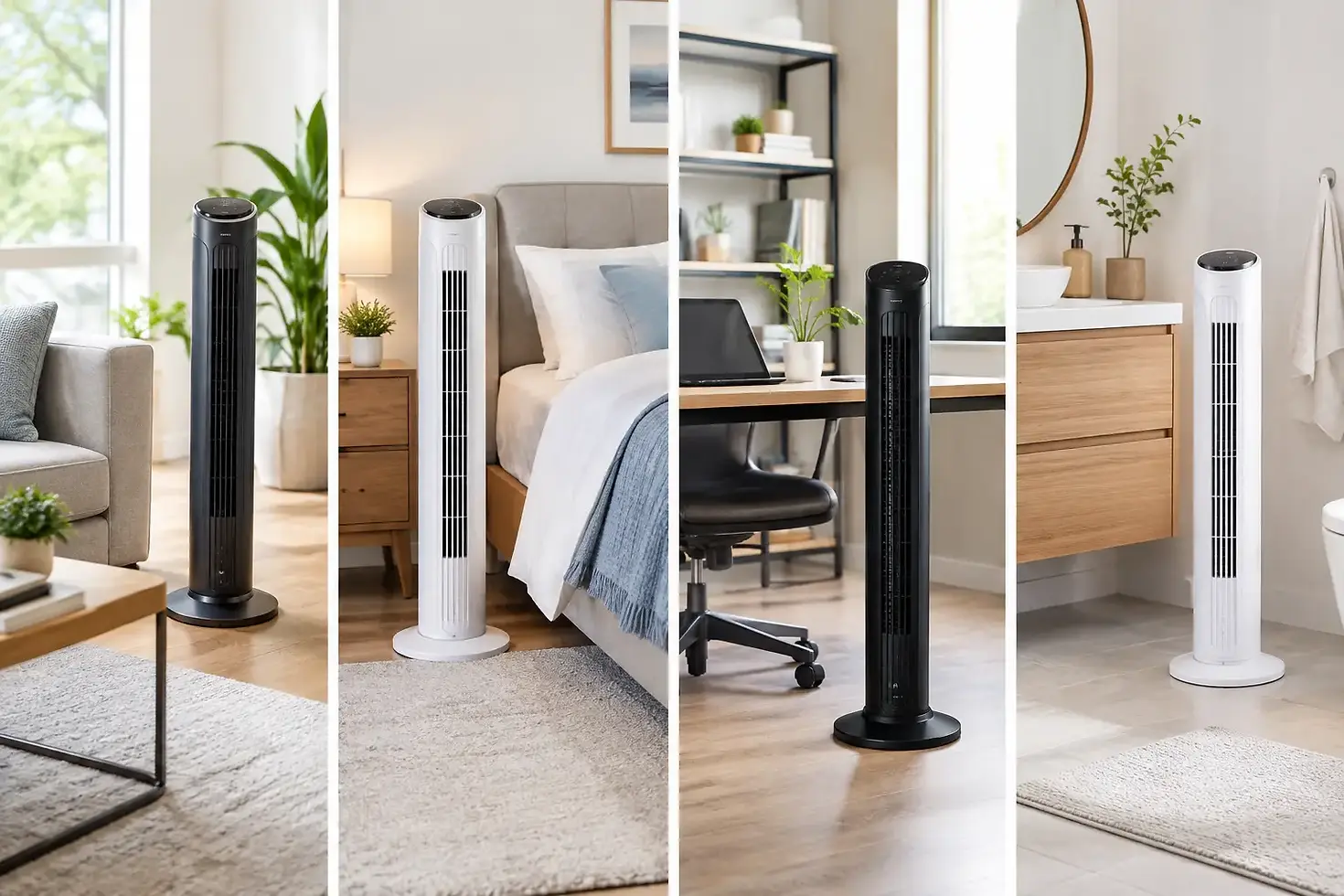
How to Choose a Tower Fan for Every Room

A stuffy bedroom can make even the most thoughtfully layered bed feel less inviting, while a warm living room can take the ease out of a slow afternoon at home. A tower fan offers a simple way to restore comfort without crowding the room with a bulky appliance. Slim, upright, and easy to tuck beside a sofa, nightstand, or desk, it brings welcome airflow to the spaces where you rest, gather, and reset.
The best choice is not always the fan with the longest feature list. It is the one that suits the room, the season, and the way you live in your home. From soft nighttime airflow to stronger circulation after a sunny afternoon, a few details make the difference between a useful purchase and a device that quietly supports your daily comfort.
What Makes a Tower Fan Different?
A tower fan is designed around a vertical body rather than the familiar round grille of a pedestal or box fan. Air moves through an internal column and exits through a tall, narrow vent, creating a streamlined profile that works especially well in rooms where floor space is precious.
Its appearance is part of its appeal. A clean-lined tower fan can sit naturally among modern lighting, soft textiles, and carefully chosen furnishings without becoming the visual center of the room. For renters working with a compact bedroom, families keeping pathways clear, or anyone creating a calmer living area, that smaller footprint matters.
Most models also distribute air across a greater vertical area than a compact desk fan. The breeze may feel less concentrated, but it can reach a seated person on the sofa as well as someone reclining in an armchair. Models with oscillation sweep airflow from side to side, helping a shared space feel more evenly refreshed.
Start With the Room, Not the Features
Before comparing controls, timers, or finishes, consider where the fan will live. A fan selected for a small bedroom has different priorities than one meant to cool a sun-filled family room.
Bedrooms call for quiet control
For a bedroom, low noise is often as valuable as airflow. Look for several speed settings and a sleep or night mode that reduces the sound and dims the display. A timer is equally useful when you like falling asleep to a gentle breeze but do not want the fan running until morning.
Height matters here, too. A taller fan can send air across the bed from a comfortable distance, while a shorter design may be better beside a low platform bed or in a nursery. Place it where air can travel freely, rather than directly against curtains, upholstered furniture, or a crowded corner.
A fan is not a substitute for air conditioning in extreme heat, but it can make a cooled room feel more comfortable by moving air across the skin. In milder weather, it may be all a bedroom needs for a more restful night.
Living rooms benefit from wider coverage
In a living room, choose a tower fan with oscillation and enough airflow to reach beyond one chair. This is particularly helpful in spaces with afternoon light, open layouts, or several people relaxing together. A remote control keeps adjustments easy from the sofa, which is a small luxury that becomes meaningful during a movie night or an unhurried weekend.
Think about placement as part of the room’s arrangement. Set the fan near an outlet but away from high-traffic walkways. A narrow model can sit beside a media console, near a reading chair, or along a wall without interrupting the visual flow of the space.
Home offices need focused comfort
A warm office can make the day feel longer, especially when computers and sunlight add heat to a small room. In this setting, a compact tower fan with adjustable speeds is often more practical than a large, powerful model. You want enough circulation to stay comfortable at your desk, without papers lifting or the fan’s sound competing with calls.
If you work from home regularly, prioritize a quiet motor and simple controls. A fan that is easy to adjust encourages you to use it throughout the day, rather than leaving it on one setting that is too strong or too distracting.
Airflow, Oscillation, and Speed Settings
Airflow is the heart of any fan, yet more power is not automatically better. A powerful tower fan can be a welcome addition to a large room, but it may feel excessive in a small sleeping space. Multiple speed settings give you room to adjust from a barely-there breeze to more noticeable circulation when the temperature rises.
Oscillation is worth considering for most shared rooms. It moves the airflow across a wider area instead of directing it toward one spot. However, a non-oscillating fan can be preferable when you want personal cooling at a desk, vanity, or bedside. Some models allow you to turn oscillation on and off, offering the best of both approaches.
Look beyond claims of “high velocity” and imagine the fan during your actual routine. Will it cool one person reading before bed? Help freshen a room after cooking? Support airflow while a family gathers in the living room? The answer will guide the right balance of strength and flexibility.
The Details That Make Daily Use Easier
A well-chosen tower fan should feel uncomplicated. Controls may be located on the top panel, handled with a remote, or both. Touch controls can look especially clean in a refined room, while buttons may be easier to operate in low light. Neither is inherently better; the right choice depends on what feels intuitive to you.
A timer supports both comfort and energy awareness. Set it for an hour while you settle in for sleep, or for the length of an afternoon rest, without remembering to switch it off later. An automatic shutoff feature is also reassuring for busy households.
For bedrooms and media rooms, check whether the fan’s display can dim or turn off. Even a small blue or white light can be distracting in an otherwise peaceful retreat. If you are sensitive to sound, reviews and product specifications can help, but remember that “quiet” is subjective. A soft, steady hum may be easy for one person to ignore and bothersome for another.
Air purifying features can be appealing, but they deserve a clear-eyed comparison. A fan with a filter may help capture some particles, depending on its design, but it should not be assumed to replace a dedicated air purifier. It also introduces ongoing filter replacement costs. Choose that option when cleaner-air support is a priority, not simply because it adds another feature.
Styling a Tower Fan Into Your Space
Practical home technology can still feel considered. Choose a finish that works with the room: black for a grounded, contemporary contrast; white for an airy, minimal look; or a soft neutral that blends into a serene bedroom palette. A slim silhouette tends to complement Nordic, modern, and transitional interiors particularly well.
Avoid hiding the fan so completely that airflow is blocked. Instead, give it a purposeful place near the edge of a seating area, beside a console, or in an open section of a bedroom wall. Keep cords tidy and visible pathways clear. The result feels less like an appliance added as an afterthought and more like one carefully chosen part of a comfortable home.
Care That Keeps Airflow Feeling Fresh
Dust naturally collects around a fan’s intake and outlet over time, reducing performance and affecting the look of the unit. Unplug the fan before cleaning, then use a soft cloth or a vacuum brush attachment to remove surface dust according to the manufacturer’s instructions. Do not spray cleaner directly into the vents.
A quick clean every few weeks during heavy use is usually easier than dealing with a season’s worth of buildup. Before storing the fan, wipe it down, make sure it is fully dry, and keep it in a clean, dry place. This small ritual helps it feel ready when warmer days return.
A tower fan will not change the weather outside, but it can change the feeling of a room. Choose one that matches your space and your routines, then let its quiet movement make your bedroom, living area, or workspace a little more restful.


Comments